
Turning Uncertainty into Opportunity: A Guide for Malaysian Businesses in Global Trade
The calm seas of global trade that businesses have sailed on for decades have grown choppy. Far-off geopolitical storms and shifting trade winds are now creating powerful waves that reach our shores in Malaysia. For many local enterprises, this new era of unpredictability feels daunting. Constant headlines about new tariffs, supply chain breakdowns, and economic tensions can make the future of international commerce seem uncertain. However, these challenges are not insurmountable roadblocks; they are calls for a new way of thinking. In this article, we will explore practical strategies for Malaysian businesses. We’ll show you how to navigate these turbulent waters, protect your operations, and even discover new, promising horizons in this changing global landscape.
The Shifting Tides of Global Commerce
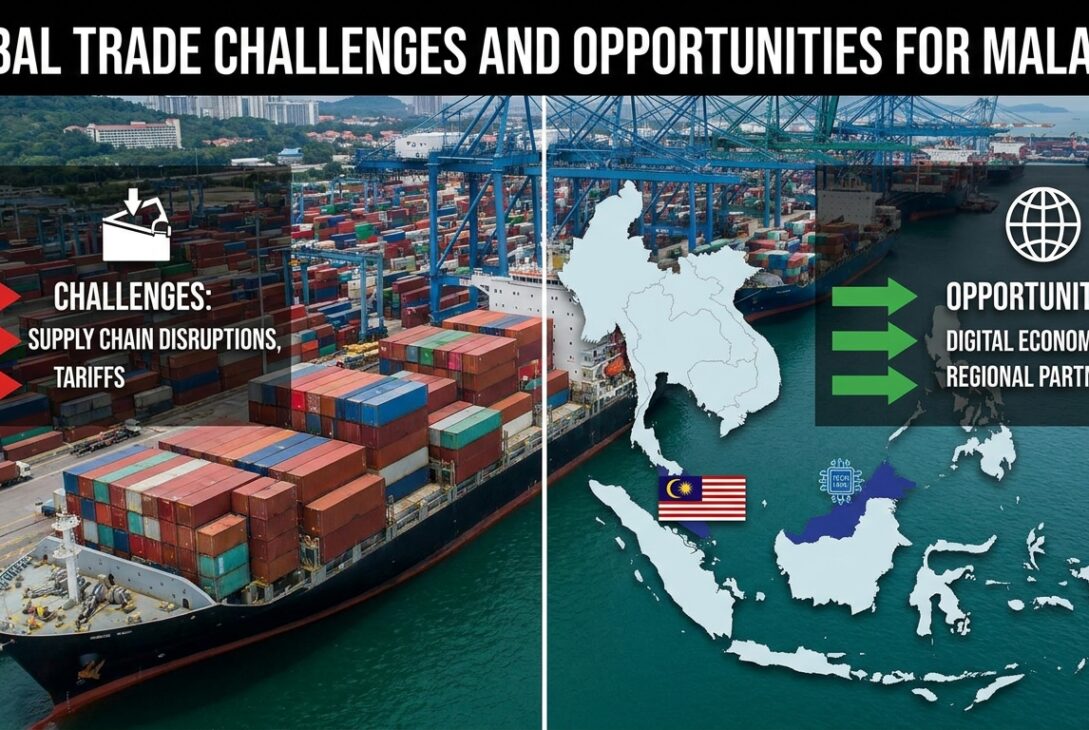
For a long time, the path of global trade seemed clear. But today, the map is being redrawn. Trade disputes between major economic powers, like the United States and China, have direct effects on Malaysian industries, particularly our vital electronics and manufacturing sectors. A new tariff imposed thousands of miles away can suddenly increase the cost of components sourced for factories in Penang or Johor. Furthermore, regional conflicts, such as the one in Eastern Europe, disrupt the flow of essential goods like grains and energy, causing ripple effects that drive up operational costs for everyone. These are the new international trade trends Malaysian businesses must now understand and adapt to. It’s no longer enough to just produce a great product; we must also be smart navigators of this complex and ever-changing environment.
Reinforcing Your Defences: Practical Risk Management
In unpredictable times, the strongest defence is a flexible one. Relying on a single supplier or country for your essential materials is a risk many can no longer afford. The key is diversification. We encourage businesses to explore alternative sourcing options within the ASEAN region, taking advantage of trade agreements that make partners like Vietnam, Thailand, and Indonesia attractive. This spreads your risk and strengthens your supply chain. It’s also time to rethink inventory. The ‘just-in-time’ model, while efficient, is fragile. Adopting a ‘just-in-case’ approach by holding slightly more stock of critical components can provide a crucial buffer against unexpected shipping delays. Don’t forget to make the most of support from Malaysian government bodies like MATRADE, which offers valuable market intelligence and assistance in connecting with new international partners.
Charting New Courses to Opportunity
Every challenge brings a hidden opportunity. While traditional markets may be facing headwinds, new routes are opening up. The Regional Comprehensive Economic Partnership (RCEP) is a great example. This trade agreement gives Malaysian businesses preferential access to a massive market that includes China, Japan, South Korea, Australia, and New Zealand. Are you exploring how your products could fit into these markets? Beyond geography, innovation is your best compass. Can you adapt your products to meet a growing global demand for sustainable and eco-friendly goods? Can you digitalise your services to bypass physical trade barriers altogether? Malaysia’s strong position in the global Halal market, for instance, remains a unique advantage that can be leveraged to enter new and expanding consumer economies in the Middle East and beyond.

Building an Agile and Resilient Business
Long-term success in this new era depends on more than just external strategies; it requires building a stronger, more adaptable organisation from within. Agility is paramount. This means creating a business culture where your team is empowered to make quick, informed decisions to respond to market changes. Investing in technology is no longer optional. Digital tools for supply chain management, e-commerce platforms to reach global customers directly, and data analytics can provide the insights needed to anticipate problems and act decisively. These are the tools that help manage the global trade challenges Malaysia is currently facing. Furthermore, collaboration within your industry can be a powerful force. Sharing information and best practices with other Malaysian companies helps everyone become more competitive and resilient together.
Setting Your Compass for the Future
The landscape of international trade has fundamentally changed, and navigating it requires a proactive and strategic mindset. The key is not to fear the uncertainty but to prepare for it. By diversifying supply chains, you build a safety net against disruptions. By making the most of trade agreements like RCEP, you unlock doors to new growth. By focusing on innovation and technology, you create a business that is agile and ready for the future. The global trade challenges Malaysia must confront are significant, but they also present a chance to innovate and grow stronger. By staying informed on international trade trends Malaysian businesses can do more than just survive; they can chart a course towards greater resilience and lasting success on the world stage.