
The calm seas of global trade that once carried Malaysian exports to distant shores are growing choppy. Around the world, we are witnessing a significant shift, with protectionist waves making headlines and creating uncertainty. For an export-driven economy like ours in Malaysia, these are not distant storms but challenges that lap directly at our economic foundations. The rise in trade tensions, particularly those involving major players like the United States, China, and Canada, presents a new and complex landscape for our businesses to navigate. In this article, we will explore the nature of these ongoing conflicts, analyse the potential effects on Malaysian companies, and outline practical strategies to help your business not just survive, but find new avenues for growth amidst this volatility.
The Ripple Effect of Global Trade Spats
What started as targeted tariffs between a few nations has now evolved into a web of complex economic disagreements. At the heart of these issues are moves by countries like the United States to rebalance trade deficits and protect domestic industries, leading to retaliatory measures from trading partners. While Malaysia may not be a direct party in these headline disputes, we are deeply integrated into the global supply chain. When a major economy imposes tariffs on another, the entire chain feels the jolt. For instance, Malaysian companies that supply components to Chinese factories for products destined for the US market can experience a sudden drop in demand. These international trade disputes create a ripple effect, disrupting logistics, increasing operational costs, and making long-term planning a difficult task for everyone involved.
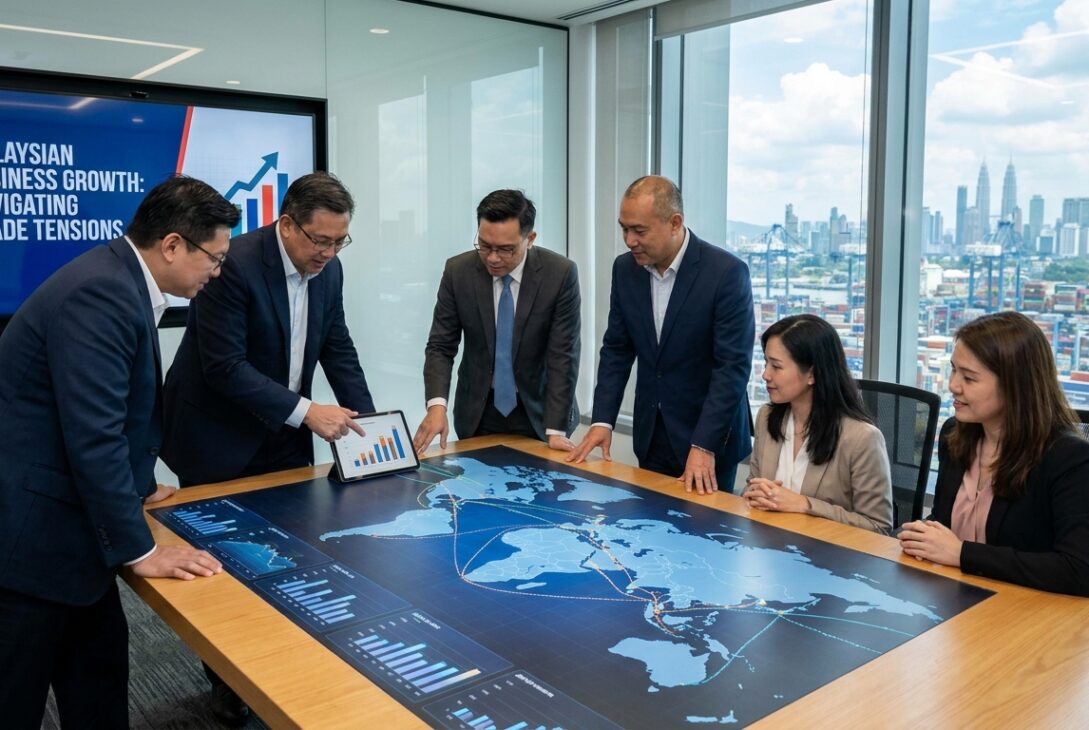
What Does This Mean for Your Malaysian Business?
The primary concern for many local enterprises is the direct tariff impact on Malaysian businesses, even if our goods are not the ones being taxed. The uncertainty alone can cause foreign buyers to delay orders or seek suppliers in more stable regions. Our key export sectors, such as Electrical & Electronics (E&E) and manufactured goods, are particularly exposed. A slowdown in global demand directly translates to reduced orders for our factories. Furthermore, businesses may face rising costs for raw materials if their own suppliers are affected by tariffs. This squeeze on profit margins, combined with unpredictable market access, presents a serious challenge to growth and stability. Companies that have heavily relied on a single export market or supply source are now finding themselves in a particularly vulnerable position.
Turning Challenges into Opportunities
While the outlook may seem daunting, periods of disruption often create new opportunities for those willing to adapt. The most important strategy for Malaysian businesses is diversification. Relying too heavily on one or two major markets is a risky game in today’s climate. It is time to seriously explore new and emerging markets. The ASEAN region itself is a powerhouse of over 650 million people, and trade agreements like the Regional Comprehensive Economic Partnership (RCEP) have opened up streamlined access to a massive economic bloc. By actively seeking customers in countries across Southeast Asia, the Middle East, or even Latin America, businesses can spread their risk and build a more resilient customer base that is less dependent on the political climate of any single nation.

Strengthening from Within
Beyond looking outward for new markets, it is crucial to strengthen your business from within. The ongoing international trade disputes should serve as a powerful motivator to review and optimise your operations. Take a hard look at your supply chain. Are you overly reliant on a single supplier from a country embroiled in trade tensions? Now is the time to identify alternative sources, perhaps even looking at local Malaysian suppliers to shorten your supply chain and reduce logistical risks. Moreover, investing in operational efficiency is no longer a choice but a necessity. By streamlining processes, adopting practical technology to improve productivity, and focusing on quality control, you can enhance your competitiveness. A more efficient, high-quality operation is better positioned to absorb external shocks and stand out in a crowded global market.
The Way Forward: Proactive and Prepared
Successfully navigating the future of global trade requires a proactive, not reactive, mindset. Staying informed is the first step. We encourage businesses to follow developments closely through reliable sources and government agencies like MATRADE, which provide valuable insights and support. The potential tariff impact on Malaysian businesses can be significantly reduced through careful planning and strategic foresight. This involves creating flexible business plans that can adapt to changing circumstances and stress-testing your operations against various market scenarios. Agility will be your greatest asset. Companies that can pivot quickly, whether by shifting their market focus or reconfiguring their supply chains, will ultimately be the ones that thrive.
In conclusion, the shifting tides of global trade are undeniable. The era of predictable, ever-expanding globalisation has given way to a more complex and fragmented world. For Malaysian businesses, this presents real challenges, from disrupted supply chains to uncertain demand. However, it is not a time for pessimism. Instead, we should view this as a catalyst for change—an opportunity to build stronger, more agile, and more resilient companies. By strategically diversifying export markets, reinforcing our supply chains, and relentlessly focusing on operational excellence, we can navigate these turbulent waters. The businesses that embrace this proactive approach will not only weather the current storm but will also be better prepared to seize the opportunities that lie on the horizon, ensuring a prosperous future for themselves and for Malaysia.