Written by Bryan•May 29, 2026•12:04 pm•Insights •
Views: 0
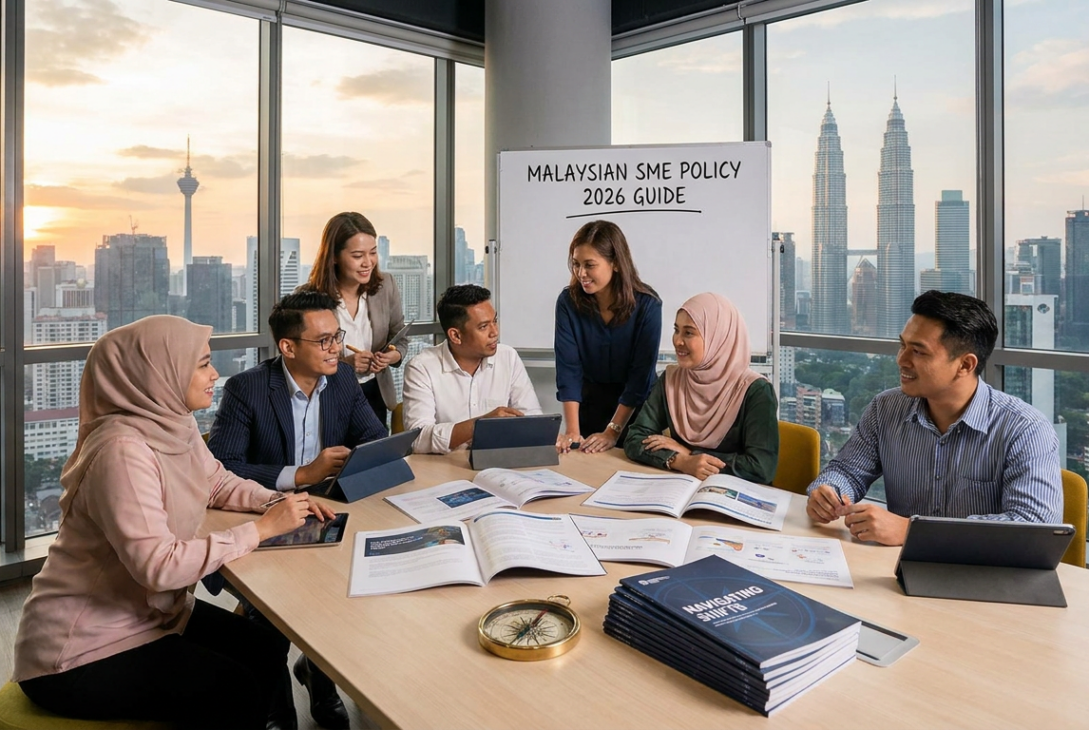
Navigating Policy Shifts: A Guide for Malaysian SMEs in 2026
The Great Business Transition: Navigating Policy-Driven Market Shifts in 2026
The ground beneath the global economy feels less like solid rock and more like shifting sand. For business owners in Malaysia, peering towards 2026 can feel like trying to map a coastline that changes with every tide. These tides are the rapid, often unpredictable, economic policy changes happening worldwide. From trade agreements being redrawn to new domestic tax discussions, the rules of the game are in constant motion. But this uncertainty doesn’t have to be a source of fear. For the prepared, it’s a landscape of opportunity. This article is our guide to understanding these shifts and turning them into a competitive advantage. We will explore the challenges ahead and deliver practical thoughts on navigating policy-driven market shifts in Malaysia, transforming potential disruption into a platform for real, sustainable growth.
“A business owner looking at a map of Southeast Asia, planning new trade routes.”
The New Economic Weather System
Think of global economic policies as a powerful weather system. Storms that gather thousands of miles away, like international trade disputes or new green tariffs in Europe, eventually make landfall here, affecting everything from supply chain costs to consumer demand. We are seeing major economies use trade policy and taxation not just for revenue, but as strategic tools. This creates ripples that Malaysian businesses, especially our small and medium enterprises (SMEs), feel directly. A sudden tariff can make materials more expensive overnight, while a new tax reform proposal can throw long-term financial planning into disarray. Staying informed is no longer enough; we need to become business meteorologists, able to read the signs and prepare before the storm hits.
The Pressure Points for Our SMEs
For Malaysian SMEs, these global shifts create very specific pressure points. The ongoing trade tensions between major world powers, for example, can disrupt supply chains that have been reliable for years. A manufacturer in Penang might suddenly find that a key component from overseas is 20% more expensive or, worse, unavailable. On the home front, discussions around tax reforms can cause significant uncertainty. Businesses need clarity to plan investments and manage cash flow, and the prospect of major changes can lead to a ‘wait-and-see’ approach that stifles growth. These issues highlight the complexity of navigating policy-driven market shifts in Malaysia. It’s a delicate balancing act between managing immediate operational needs and planning for a future that is anything but certain.
“Close-up of a calculator and invoices, representing financial planning and tax challenges.”
Building a Business That Bends, Not Breaks
So, how do we build resilience in the face of this constant change? The answer lies in flexibility. The era of rigid, five-year plans set in stone is over. Instead, businesses need to develop agile models that can pivot quickly. One of the most effective Malaysian SME strategies for economic resilience is supply chain diversification. Relying on a single country or supplier is a risk. By exploring alternatives within ASEAN or even sourcing locally, businesses can protect themselves from geopolitical shocks. Another key strategy is proactive scenario planning. What happens if our main export market imposes a new tariff? What if a domestic tax credit is removed? By thinking through these ‘what-ifs’ and creating contingency plans, you can react thoughtfully instead of panicking.
Finding the Silver Lining in the Storm
While it is easy to focus on the challenges, every market transition carves out new paths to success. When traditional markets become difficult, new ones often open up. For instance, a trade dispute might make Malaysian goods more competitive in a third country that is looking for new partners. These shifts force us to innovate. Perhaps it’s time to explore a new digital service offering, invest in automation to offset rising labour costs, or develop greener products to meet the demands of environmentally-conscious markets in Europe. The key is to see these disruptions not as roadblocks, but as signposts pointing towards new growth avenues. Adaptable companies can gain a first-mover advantage, capturing market share while less nimble competitors struggle to keep up.
Conclusion: Charting Your Course for 2026 and Beyond
The journey towards 2026 and beyond will be defined by change. The economic policies of tomorrow will continue to reshape our markets in ways we can only begin to anticipate. However, this ‘Great Business Transition’ is not something to be feared. Instead, it is a call to action. By shedding rigid mindsets and embracing a culture of adaptability, we can turn uncertainty into our greatest asset. The core of strong Malaysian SME strategies for economic resilience lies in proactive planning, a flexible business model, and the courage to seek opportunity within disruption. At our core, we believe Malaysian businesses have the spirit and ingenuity not just to navigate this new era, but to lead the way, building stronger, more competitive companies poised for long-term success.