

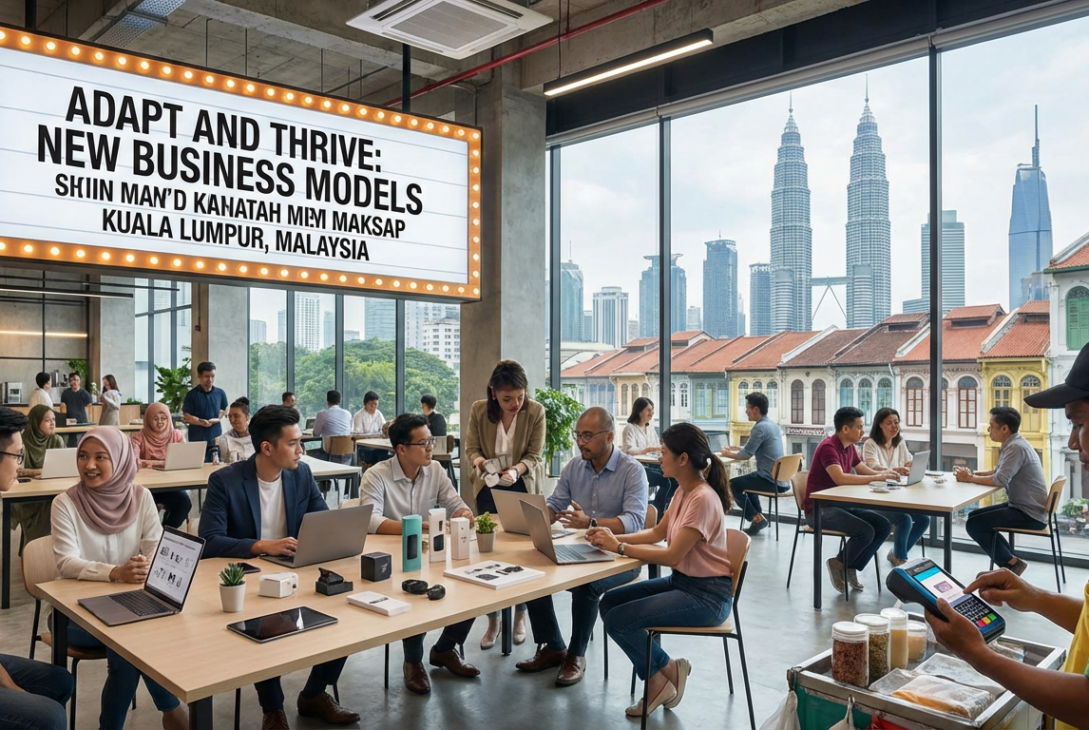
The blueprint that built successful Malaysian companies a decade ago is quickly becoming obsolete. Notice how the corner shop now battles with instant delivery apps, or how your favourite neighbourhood restaurant might be operating from a shared ‘cloud kitchen’ you’ll never see? These aren’t isolated incidents; they are signals of a fundamental shift in our economy. The very definition of a business is being redrawn, driven by powerful currents of technology, new consumer demands, and fresh entrepreneurial thinking. For every business owner in Malaysia, standing still is no longer an option. The challenge is clear: adapt or risk being left behind. This article will explore this new landscape, looking at the emerging opportunities in business acquisitions, digital-first models, and the strategic adaptations required to not just survive, but to truly thrive in this dynamic era.
The Ground is Shifting Beneath Our Feet
For generations, the path to business success in Malaysia was relatively straightforward: find a good location, offer a quality product or service, and build a loyal customer base through word-of-mouth. Today, that model is being turned on its head. Consumer expectations have changed dramatically. We now demand convenience, speed, and a seamless digital experience. This has created a fertile ground for business model innovation in Malaysia. Traditional brick-and-mortar retailers are now competing with large e-commerce platforms like Shopee and Lazada, while service providers must contend with on-demand apps that connect customers with freelancers in minutes. It’s no longer about being the best on your street; it’s about being the most accessible and efficient in a crowded digital marketplace.

New Pathways to Ownership: The Acquisition Advantage
Starting a business from scratch is a high-risk venture. What if there was a smarter way? A significant, yet often overlooked, opportunity lies in business acquisitions and wealth transfer. Throughout Malaysia, many successful, first-generation Small and Medium Enterprises (SMEs) are facing a succession crisis. The children of the founders may have pursued different career paths, leaving these established businesses without a clear heir. This presents a golden opportunity for a new generation of entrepreneurs. Acquiring an existing business means you inherit a proven model, an established customer base, and, most importantly, immediate cash flow. Instead of building from zero, you start on a solid foundation, allowing you to focus your energy on modernisation and growth rather than just survival.
Rethinking the Franchise: Mobile and Internet-First Models
When we think of franchises, our minds often go to fast-food chains or retail outlets. However, the most exciting developments in this space are now digital. The rise of low-cost, high-flexibility franchise models is a clear example of business model innovation in Malaysia. Consider the boom in ‘cloud kitchens’—delivery-only restaurants that operate from a shared commercial kitchen, massively reducing overheads. We’re also seeing franchise opportunities in mobile services, from at-home car grooming to personalised tutoring conducted entirely online. These models leverage the power of the internet and mobile technology to build a brand and system that can be replicated with far less capital than a traditional franchise, opening the door for many more aspiring business owners.

From Disruption to Advantage: Adapting Your Toolkit
Thriving in this new environment requires a change in mindset and tools. It’s not about having a five-year plan set in stone; it’s about being agile and ready to pivot. Integrating technology is no longer a luxury but a necessity. This doesn’t mean you need a team of developers. Simple, off-the-shelf solutions can have a huge impact. Think of a modern Point-of-Sale (POS) system that also tracks your inventory, a Customer Relationship Management (CRM) tool to manage your client interactions, or even just mastering WhatsApp Business to provide excellent customer service. This type of ongoing adaptation is the key to navigating the Technological disruption in Malaysian SMEs. It’s about using accessible tools to work smarter, understand your customers better, and make data-driven decisions that give you an edge over the competition.
The pace of change can feel daunting, but within this disruption lies immense opportunity. The old barriers to entry are crumbling, creating new frontiers for those with vision and drive. The key is to shift your perspective from defence to offence—don’t just protect your old model, but actively seek out ways to reinvent it. By understanding the potential in low-cost digital businesses, exploring acquisition opportunities, and embracing strategic adaptation, you can position your enterprise at the forefront of this new economic wave. The future of Malaysian business will not be defined by those who cling to the past, but by the innovators and adapters who are building the models of tomorrow. The ongoing Technological disruption in Malaysian SMEs is not a threat to be feared, but a powerful current to be harnessed for unprecedented growth and success.